How to Write an Original Story Kids Will Want Again
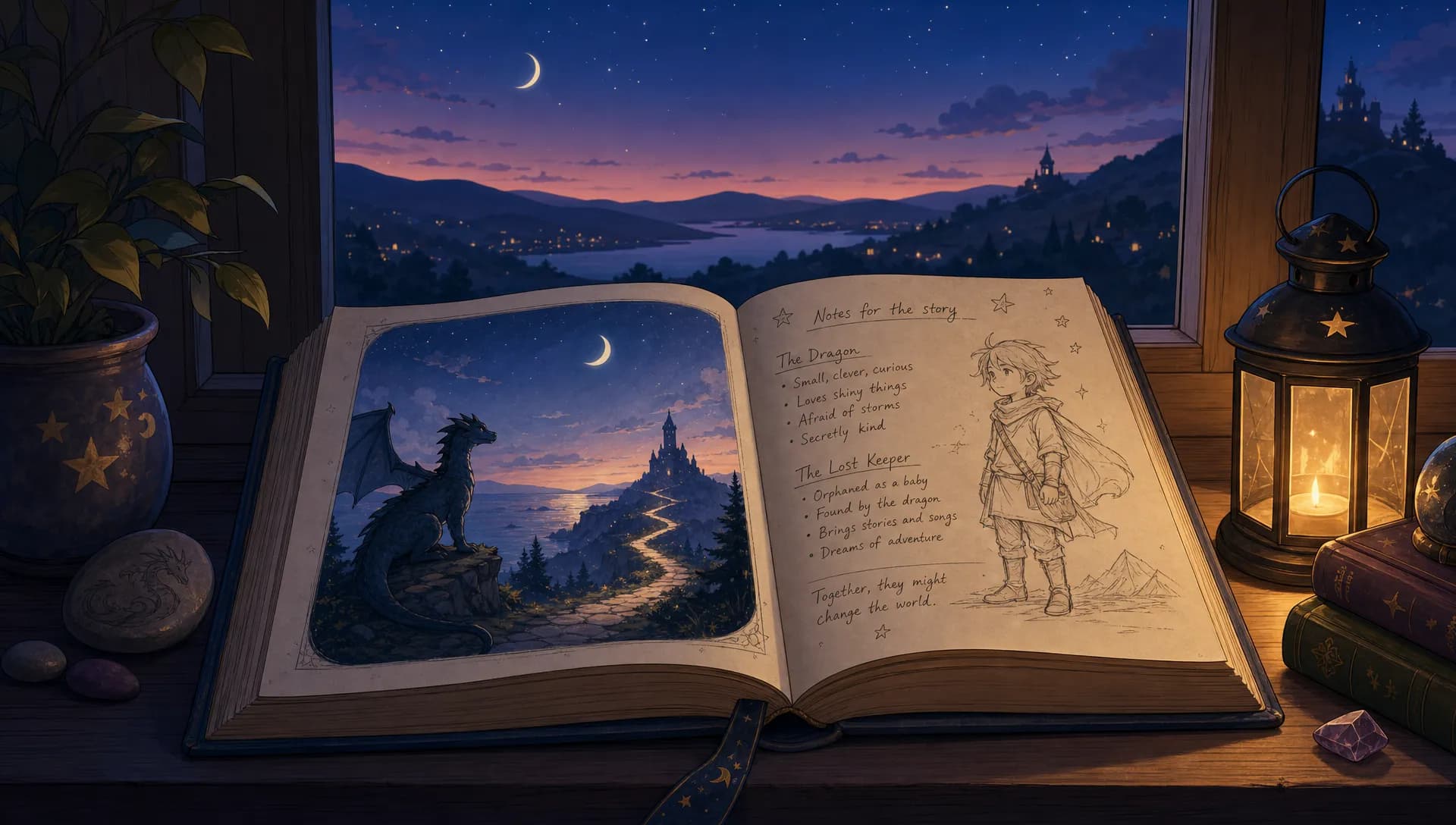
An original story for children does not need to be strange, complicated or packed with twists. In fact, the stories children ask for again usually feel both fresh and familiar. They offer a new world to explore, but they also give a child something steady to return to: a character they care about, a feeling they recognise, a rhythm they can join in with, and an ending that feels satisfying every time.
That is the real challenge. You are not just trying to write something no one has ever written before. You are trying to write an original story that feels personal, playful and worth revisiting.
Whether you are writing for your own child, a class, a bedtime routine or a keepsake gift, the best place to start is not with a giant plot. It is with one clear emotional promise: by the end of this story, what will the child feel?
What makes children want the same story again?
Adults often talk about originality as novelty. Children experience it differently. A child might ask for the same book every night because they enjoy knowing what comes next, because the repeated phrase makes them laugh, or because the hero is scared in the same way they sometimes feel scared.
The National Literacy Trust has long highlighted the importance of reading enjoyment for children’s literacy, confidence and wellbeing. Enjoyment is not a bonus. It is often the reason a child chooses to return to a story in the first place.
A rereadable children’s story usually has three qualities working together: comfort, surprise and connection. Comfort gives the child a safe structure. Surprise keeps the story alive. Connection makes it feel as if the story understands them.
| Story element | Why children return to it | Simple example |
|---|---|---|
| A clear central character | Children like knowing who to cheer for | A shy dragon who wants to sing |
| A repeated phrase or pattern | Repetition lets children participate | Not yet, said Pip, but soon |
| A small but meaningful problem | The stakes feel real without being overwhelming | A lost bedtime star |
| A surprising rule | The world feels original and memorable | Trees whisper only on Tuesdays |
| A warm ending | The story feels safe to revisit | The hero solves the problem and changes a little |
Originality, then, is not about avoiding every familiar idea. It is about combining familiar feelings with a specific, unexpected shape.
Start with one strong what-if
A good children’s story idea should be easy to explain in one sentence. If it takes five minutes to describe, it may be too big for the age group or too vague to hold a child’s attention.
Try building your idea from a simple what-if:
- What if a child found a tiny ocean under their pillow?
- What if a grumpy moon refused to rise until someone told it a joke?
- What if a dog could only bark in questions?
- What if a school lost all its colours on the morning of the art show?
The strongest what-ifs usually combine something ordinary with something impossible. The ordinary part helps the child enter the story. The impossible part makes it feel magical.
If you need a starting point before shaping your own idea, a bank of children’s story prompts can help you explore themes, settings and character types without copying a finished plot.
Once you have your what-if, add a desire. A character who simply wanders through a magical idea can feel passive. A character who wants something gives the story movement. The shy dragon wants to sing at the moon concert. The child with the pillow ocean wants to return a lost seahorse. The dog who barks in questions wants someone to finally answer.
Create a main character children can love quickly
Children do not need a long backstory before they care. They need a few vivid details that tell them who this character is and why the character matters.
A useful character recipe is:
- One want: what the character hopes for
- One worry: what makes the character hesitate
- One strength: what helps the character keep going
- One habit: what makes the character feel specific
For example, Mira wants to build the tallest blanket fort in the world. She worries that it will collapse. Her strength is that she notices tiny details. Her habit is keeping useful things in her socks, including string, buttons and a biscuit she forgot about.
That is already more memorable than a generic brave child. A good children’s character does not have to be perfect. In fact, small flaws often make a character more loveable. A boastful squirrel, a nervous knight or an impatient cloud gives the story room to grow.
If you are writing for a real child, you can borrow gentle details from their life without making the story feel like a biography. A favourite colour, a beloved toy, a family saying or a familiar pet can create instant connection. For more on why this works, StoryStitch’s guide to personal stories and consistent characters explores how familiar details can make a story feel emotionally real.
Give the story a shape children can feel
Children may not know the term story structure, but they feel when a story has one. A satisfying shape helps them predict, anticipate and enjoy the journey again.
For younger children, a simple pattern often works best: a character tries, fails in a funny or surprising way, tries again, then succeeds by learning something. For older children, you can add more layers, but the emotional path should still be clear.
A practical structure looks like this:
| Story stage | What happens | What the child should feel |
|---|---|---|
| Beginning | Introduce the character, world and wish | Curiosity and attachment |
| First trouble | Something blocks the wish | Concern, excitement or laughter |
| Middle attempts | The character tries different solutions | Anticipation and participation |
| Turning point | The character notices what really matters | Recognition |
| Ending | The problem resolves in a warm, earned way | Satisfaction and comfort |
The middle is where many stories lose energy. To keep it moving, make each attempt different. If the hero tries the same solution three times, the story feels repetitive in the wrong way. If each attempt escalates, changes the mood or reveals something new, repetition becomes pleasure.
For instance, a child trying to wake a sleeping sun might first use a trumpet, then a ladder, then a whispered memory. Each attempt has a different texture. Each one teaches the child something about the sun, and about themselves.
Make the problem emotionally clear
An original plot is not enough. Children return to stories that make them feel something.
The problem should be concrete on the surface and emotional underneath. A lost teddy is not only about finding a toy. It may be about bravery, separation or learning to ask for help. A monster under the bed is not only about a monster. It may be about making friends with fear.
This does not mean the story needs to be heavy. Children’s stories can be funny, silly and light while still carrying emotional meaning. The trick is to keep the feeling age-appropriate. A picture book problem might be losing a special button. An early chapter book problem might be saving a secret garden before the first frost.
Ask yourself: if the magical part disappeared, would the story still matter? If the answer is yes, you probably have a strong emotional core.
Write language that wants to be read aloud
Children often fall in love with how a story sounds before they understand every part of how it works. Read-aloud language is one of the biggest reasons a child asks for the same story again.
You do not need to write in rhyme. Rhyme can be wonderful, but forced rhyme can make a story feel awkward. Instead, focus on rhythm, repetition and satisfying sounds.
Try adding a refrain, a short phrase that returns at key moments. It might be funny, comforting or dramatic. The best refrains change meaning slightly as the story develops. At the beginning, I am not brave enough might sound worried. By the end, I am not brave enough yet might sound hopeful.
Read your draft aloud and listen for places where your tongue trips. Children’s stories should have musical clarity. Short sentences can build excitement. Longer, softer sentences can calm the mood before sleep. Strong verbs help too. A character can wobble, zoom, sniff, tumble, tiptoe or pounce.
Use surprise that fits the rules
Surprise is essential, but random surprise can weaken a story. If a pirate suddenly appears in the final paragraph with no connection to the story, children may laugh once, but they may not feel satisfied.
Better surprises grow from rules you have already planted. If the story says that trees whisper only on Tuesdays, then a child will wait for Tuesday. If the moon loves jokes, then the final solution might involve the smallest, silliest joke in the world. The ending feels surprising and inevitable at the same time.
One useful revision question is: did I plant this idea early enough? If the solution appears from nowhere, add a small clue earlier. If the clue is too obvious, hide it inside humour, dialogue or a visual detail.
This is especially important in illustrated stories. A small object in an early illustration, such as a cracked teacup, a blue feather or a missing sock, can become meaningful later. Children love spotting these details on rereads because it makes them feel clever.
Make the ending feel earned, not merely happy
Many children’s stories end happily, but a happy ending alone is not enough. The ending should show that the character has changed, learned or chosen something important.
A weak ending solves the problem for the hero. A stronger ending lets the hero take part in the solution. The shy dragon does not suddenly become fearless because everyone claps. Instead, the dragon sings one small note, then another, and discovers that courage can begin quietly.
A strong ending often includes a return. Return to the first image, the first line, the first worry or the repeated phrase, but with a difference. This gives children the pleasure of recognition and the satisfaction of change.
For example, if the story begins with Felix hiding under the table whenever the wind knocks, it might end with Felix opening the window and saying, Come in gently, wind. Same fear, new relationship.
Keep the story age-aware
A story can be original and still miss its reader if the pacing, language or stakes do not suit the child’s age. Age ranges are flexible, of course, but they are useful when revising.
| Reader age | What usually works well | What to avoid |
|---|---|---|
| 3 to 5 | Repetition, humour, clear emotions, cosy endings | Too many characters or long explanations |
| 5 to 7 | Simple quests, playful rules, gentle suspense | Problems that take too long to begin |
| 7 to 9 | Chapter structure, stronger character growth, mysteries | Endings with no real consequence |
| 9+ | Deeper themes, layered friendships, moral choices | Talking down to the reader |
The key is respect. Children can handle rich language, big feelings and imaginative worlds when the story gives them enough support. They do not need everything simplified. They need everything made clear enough to enjoy.
Revise for the again factor
Once you have a complete draft, do not only ask, Is this original? Ask, would a child want this again tomorrow?
A helpful revision checklist includes:
- The story can be explained in one clear sentence.
- The main character wants something specific.
- The problem matters emotionally, not just physically.
- At least one line or phrase is fun to repeat.
- The magical or unusual elements follow their own rules.
- The ending grows from earlier clues.
- The final page leaves the child with a feeling, not just information.
If you are creating a personalised book, consistency matters even more. A child will notice if a character’s pet changes colour, if a magical rule disappears, or if the hero behaves in a way that does not match who they were earlier. Those details can break the spell.
That is why tools designed for story creation can be helpful at the revision stage. With StoryStitch’s AI storybook maker, you can turn a simple idea into a structured personalised story, develop chapters, create illustrations and check consistency before unlocking the finished book.
Common mistakes that make a story feel less original
The first mistake is starting with a message instead of a story. Children can sense when a book is only trying to teach them something. If the lesson matters, hide it inside action, humour and character choice.
The second mistake is making the hero too perfect. A character who always knows what to do gives the reader very little to feel. Let the hero misunderstand, worry, boast, forget or try the wrong thing first.
The third mistake is adding too many ideas. A talking forest, a time-travelling cat, a lost kingdom, a robot baker and a secret map might all be fun separately. Together, they can overwhelm the story. One strong idea, developed well, usually feels more original than five ideas competing for attention.
The fourth mistake is ending too quickly. If the solution arrives before the emotion has landed, the story feels thin. Give the character a moment to choose, change or understand.
Finally, avoid copying the shape of a famous story too closely. Inspiration is normal. Children’s literature is full of quests, wishes, lost things and brave small heroes. But your details, emotional core and character choices should belong to this story alone.
Frequently Asked Questions
How do I make an original story if every idea feels done before? Start by changing the combination, not the entire concept. A lost object, a brave journey or a talking animal can still feel fresh if the character, setting, emotional problem and rules are specific.
What makes children ask for a story again? Children often return to stories with comforting structure, memorable characters, repeated phrases, humour, emotional truth and satisfying endings. They enjoy both knowing what comes next and discovering small details they missed before.
Does a children’s story need a moral? It does not need an obvious moral. Many strong children’s stories contain meaning, but the meaning works best when it grows naturally from the character’s choices rather than being explained at the end.
How long should an original story for children be? It depends on the child’s age and format. Younger children usually prefer shorter, highly patterned stories, while older children can enjoy chapters, subplots and more complex emotional journeys.
Can I use AI to help write a children’s story? Yes, AI can help shape ideas, structure chapters, develop illustrations and refine consistency. The best results still come from a clear human intention: who the story is for, what it should feel like and which details make it personal.
Turn your idea into a story children can keep
If you have the spark of an original story, you do not have to build the whole book alone. StoryStitch helps you turn a simple idea into a personalised children’s story with structured chapters, illustrations, consistency checks and a free preview before payment.
You can create an ebook, audiobook or printed keepsake delivered to your door, then refine the story in an editable studio before the final production unlock. If you would like a step-by-step view of the process, explore how to make a storybook with StoryStitch and start shaping a story a child will want again.