How to Create a Personalised Story Book That Feels Magical
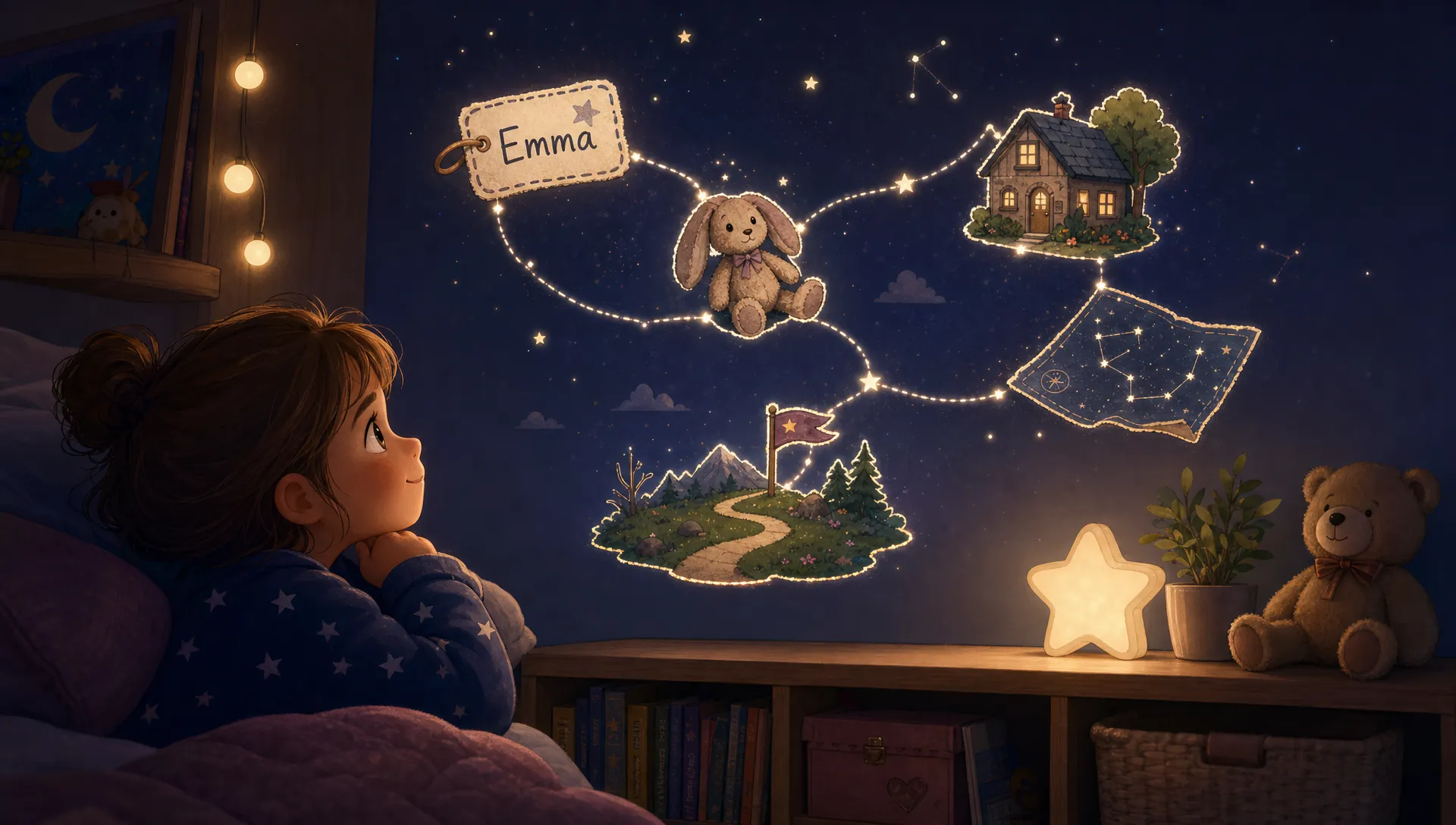
A magical personalised storybook does something ordinary books cannot quite do: it makes a child feel seen. Their name matters, their world matters, and the story seems to know the tiny details that make them laugh, wonder, or feel brave.
But if you want to create a personalised story book that feels truly special, adding a name to a template is only the beginning. The magic comes from emotional accuracy, consistent characters, the right level of adventure, and a story that sounds wonderful when read aloud at bedtime.
Whether you are making a birthday gift, a keepsake for a new sibling, or a confidence-building tale for a child who needs encouragement, the steps below will help you turn a simple idea into a personalised book with warmth, structure, and sparkle.
Start with the child, not the plot
The easiest mistake is to begin with a big adventure before you have thought about the child at the centre of it. A dragon quest, space mission, or secret garden can all work beautifully, but only if the emotional heart fits the young reader.
Before writing, make a short character profile. Think less like a form and more like a loving snapshot. What does the child care about right now? What makes them giggle? What are they proud of? What are they learning to handle?
Useful details include:
- Their first name or nickname
- Age or reading stage
- Favourite animals, places, foods, games, songs, or colours
- A familiar setting, such as a bedroom, garden, school, grandparent’s house, or local park
- A gentle emotional theme, such as courage, patience, kindness, confidence, sharing, or curiosity
- Important people or pets who could appear in the story
You do not need to include every detail. In fact, too many references can make a book feel cluttered. Choose the few that will make the child think, “This is really about me.”
Find the emotional promise of the story
A personalised storybook feels magical when it gives the child a meaningful role. They should not simply appear in the story. They should affect what happens.
Ask yourself: what should the child feel by the final page?
Maybe you want them to feel brave before starting school. Maybe you want them to feel loved after a house move. Maybe you want them to see themselves as imaginative, helpful, adventurous, or wonderfully unique.
That emotional promise becomes the hidden engine of the plot. If the promise is courage, the story might give the child a small fear to face. If the promise is kindness, the adventure might centre on helping a lost creature. If the promise is curiosity, the story might reward questions, observations, and experiments.
Here is a simple way to connect story choices to emotional impact:
| Story ingredient | What to decide | How it creates magic |
|---|---|---|
| Main feeling | The emotion the child should end with | Gives the story purpose beyond novelty |
| Personal detail | A few real names, places, hobbies, or traits | Makes the book feel made for one child |
| Adventure type | Mystery, quest, animal tale, fantasy, school story, or family journey | Shapes the tone and pace |
| Child’s strength | Bravery, humour, kindness, imagination, problem-solving, or persistence | Lets the child be the hero in a believable way |
| Ending | Comforting, funny, triumphant, or reflective | Leaves the reader with a satisfying feeling |
This is also where AI can help if you are not sure how to turn a rough idea into a complete concept. StoryStitch’s AI storybook maker is designed to take a simple idea and help shape it into a personalised digital storybook with characters, chapter outlines, illustrations, and a finished ebook.
Create a hero who feels recognisable, but not too perfect
Children love seeing themselves as the hero, but a perfect hero is rarely interesting. A magical personalised book gives the child strengths and small challenges. That balance makes the story feel alive.
For example, instead of writing, “Maya was the bravest child in the whole world,” you might write, “Maya felt a flutter in her tummy, but she took one careful step closer.” The second version is more relatable. It shows courage as a choice, not a fixed trait.
If the child is shy, the story does not need to turn them into a loud performer. It can celebrate quiet bravery. If they are energetic, the plot can give them a way to use that energy with purpose. If they love facts, jokes, dancing, football, dinosaurs, or making up songs, let those traits help solve the problem.
The goal is not to flatter the child unrealistically. The goal is to reflect them with affection.
Build a simple story structure children can follow
A personalised book does not need a complicated plot. In children’s stories, clarity is often more magical than complexity. A clear structure helps young readers understand what is happening and enjoy the anticipation of what comes next.
A dependable structure looks like this:
- A familiar beginning: The story opens in a place the child can picture, such as home, school, the garden, or a favourite imaginary world.
- A surprising invitation: Something unusual happens, such as a glowing map appearing, a pet speaking, or a tiny door opening behind a bookshelf.
- A problem to solve: The child needs to help someone, find something, learn something, or make a brave choice.
- A journey with small challenges: Each scene lets the child use a personal strength, a memory, or a kind action.
- A moment of doubt: The hero feels unsure, which makes the ending more satisfying.
- A meaningful choice: The child succeeds because of who they are, not because luck solves everything.
- A warm return: The ending brings comfort, pride, humour, or a bedtime-ready sense of safety.
This structure works for both short picture books and longer chapter-by-chapter stories. If you want a more detailed process for turning a small idea into a finished book, StoryStitch also has a practical guide on how to make a storybook from first idea to finished edition.
Choose personal details that deepen the story
Personalisation should do more than decorate the pages. The best details change how the story unfolds.
A child’s favourite teddy could become the keeper of an ancient password. A family dog could sniff out the trail to a hidden moon meadow. A grandparent’s favourite saying could become the clue that unlocks the final door. A child’s love of pancakes, trains, shells, football boots, rainbows, or space rockets can become part of the plot rather than a random mention.
Try to include details in three ways:
- Identity details: Name, nickname, appearance, favourite outfit, family members, pet names, or home setting.
- Interest details: Hobbies, favourite animals, books, toys, foods, places, and subjects they love.
- Emotional details: A goal, worry, recent milestone, family tradition, or value you want the story to celebrate.
This is where many personalised books become keepsakes. Years later, those tiny details remind the family of who the child was at that age.
Make the illustrations part of the storytelling
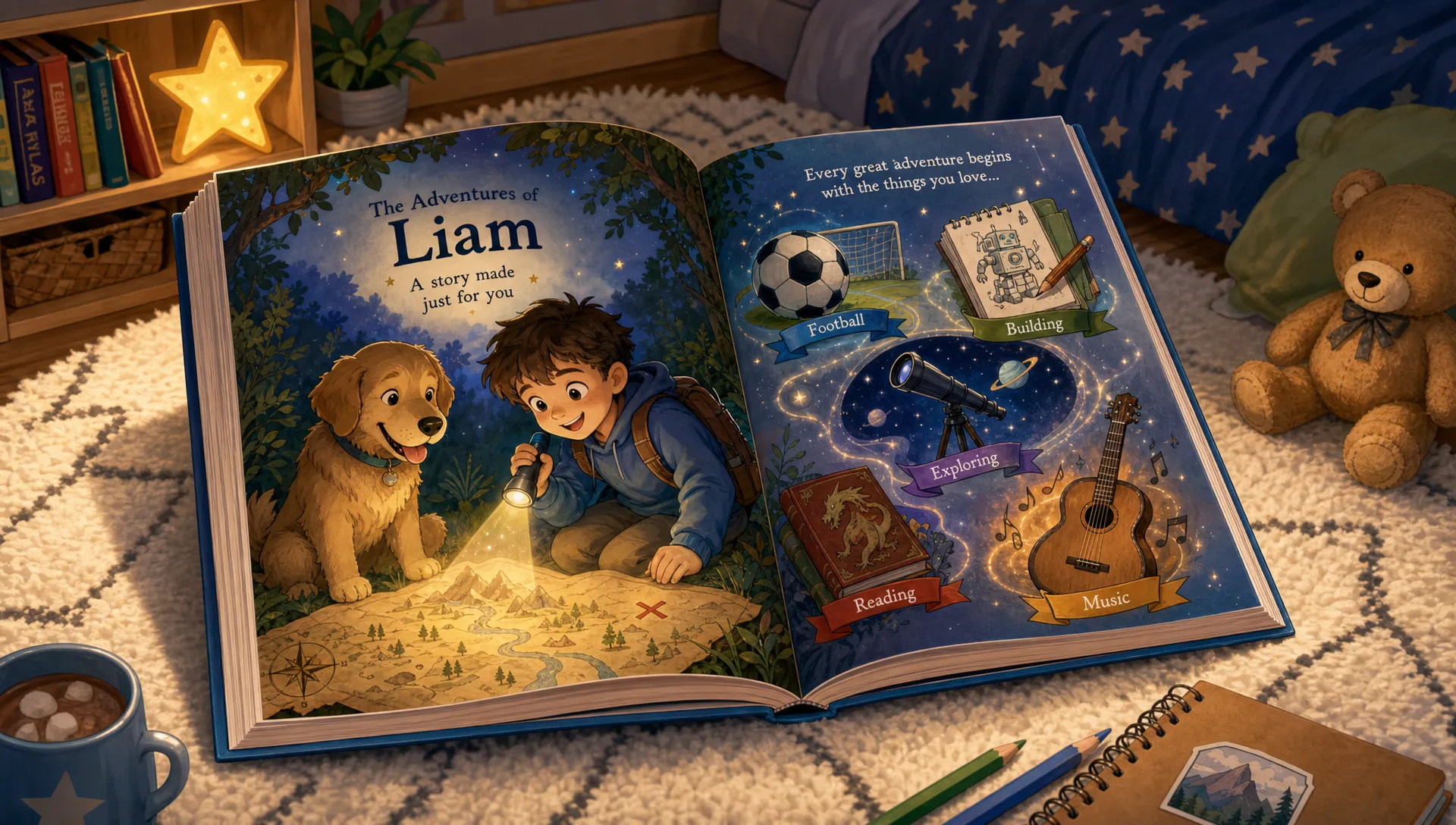
Illustrations are not just pretty extras in a personalised storybook. For children, pictures help carry meaning. They show emotions, clarify action, reinforce sequence, and make characters easier to recognise from page to page.
When planning illustrations, think about consistency first. The child hero should look recognisably the same throughout the book. Important companions, pets, magical objects, and settings should also stay visually coherent. This helps the story feel like one complete world rather than a collection of separate scenes.
Good illustration prompts or notes often include:
- The character’s approximate age and key visual features
- The mood of the scene, such as cosy, mysterious, joyful, or triumphant
- The setting and time of day
- The action taking place
- Any important object that must appear, such as a red scarf, silver key, toy rabbit, or blue backpack
If you are creating a book for younger children, illustrations can also reduce the pressure on the text. A page might not need to explain every emotion if the picture clearly shows a nervous smile, a proud grin, or a comforting hug. For more on this, StoryStitch’s guide to how book illustrations help children follow a story explores the role of visual clues in children’s understanding.
Write for the ear, not just the page
Many personalised storybooks are read aloud, especially at bedtime. That means rhythm matters. A sentence that looks fine on screen may feel awkward when spoken.
Read each page aloud and listen for places where you stumble. Shorter sentences often work well for younger children, but variety matters too. A gentle mix of short and medium sentences creates a natural storytelling rhythm.
Repetition can be especially powerful. A recurring phrase gives children something to anticipate and join in with. For example, a story about confidence might repeat, “One small step, then one more.” A story about curiosity might repeat, “What else could it be?”
You can also use sound to create delight. Alliteration, playful names, and sensory words can make a story feel richer. Think of “the whispering willow,” “a pocket full of mooncrumbs,” or “the tip-tap of tiny paws on the stairs.”
Just be careful not to make the language too busy. The child should never have to fight through clever wording to understand the story.
Match the length and format to the reader
The perfect personalised story book depends on how it will be enjoyed. A three-year-old may want a short, picture-led story with a comforting ending. A seven-year-old may enjoy chapters, mysteries, and recurring jokes. A grandparent might want a printed keepsake, while a parent may love having an audiobook for car journeys or quiet time.
| Format | Best for | What to prioritise |
|---|---|---|
| Ebook | Instant reading, travel, sharing with family | Clear layout, strong pacing, readable text |
| Audiobook | Bedtime, car journeys, children who enjoy listening | Rhythm, repetition, expressive dialogue |
| Printed book | Gifts, keepsakes, birthdays, family milestones | Polished illustrations, durable emotional value, rereadability |
| Chapter story | Older children or longer adventures | Consistent plot, chapter endings, character growth |
StoryStitch supports ebook, audiobook, and printed keepsake formats, so you can think about the experience you want before finalising the story. A book made for bedtime may need a softer final chapter than one made for a lively birthday surprise.
Use AI as a creative partner, then add your human touch
AI can make it much easier to create a personalised story book from scratch, especially if you do not write often or feel unsure where to begin. It can help structure chapters, generate illustrations, maintain story consistency, and turn a prompt into a finished edition.
However, the most magical details usually come from you. AI might suggest a brave forest adventure, but you know that the child calls every squirrel “Mr Flufftail.” AI might build a castle quest, but you know that the child’s favourite bedtime phrase is “snug as a sleepy starfish.”
The strongest approach is collaborative. Start with a clear idea, review the preview carefully, adjust details, and keep refining until it sounds like a story only your family could have made.
With StoryStitch, you can begin from a simple idea, review a free preview before payment, edit the story in the studio, and unlock production when you are ready. That keeps the process flexible while still helping you move from blank page to finished book.
A quick checklist before you finish
Before you approve your personalised storybook, give it one final review as both creator and reader. Imagine the child hearing it for the first time. Does the story feel clear, loving, and fun? Does it reflect them in a way that will make them smile?
Check the following:
- The child’s name and personal details are correct
- The story has a clear beginning, middle, and ending
- The child hero solves or meaningfully influences the main problem
- The tone suits the child’s age and sensitivity
- Illustrations match the characters and key moments consistently
- The ending feels warm, satisfying, and worth rereading
- The book format matches the occasion, such as bedtime, gifting, travel, or keepsake reading
A magical book is not necessarily the most elaborate one. It is the one that feels carefully made.
Frequently Asked Questions
How do I create a personalised story book if I only have a small idea? Start with the child, the feeling you want the story to create, and one simple adventure. A small idea such as “a boy who loves dinosaurs finds a secret egg” can become a complete book when you add a clear problem, personal details, and a warm ending.
What age is best for a personalised storybook? Personalised storybooks can work for toddlers, early readers, and older children, but the structure should match the age. Younger children usually need shorter text, familiar emotions, and strong illustrations. Older children may enjoy chapters, humour, mystery, and more complex choices.
How many personal details should I include? Choose a handful of meaningful details rather than trying to include everything. A name, a favourite animal, a familiar place, and one emotional theme can be more powerful than a long list of references.
Can a personalised storybook be a good gift? Yes. A personalised book can work beautifully for birthdays, new siblings, holidays, school milestones, and family keepsakes because it is made around the child rather than bought off the shelf. The key is to make the story emotionally relevant, not just personalised on the surface.
Turn your idea into a story they can keep
If you already have the first spark, a favourite animal, a family memory, a bedtime phrase, or a child who deserves to star in their own adventure, you can turn it into something lasting.
With StoryStitch, you can create personalised storybooks from a simple idea, review a free preview, shape chapters and illustrations, and choose ebook, audiobook, or printed keepsake formats when your story is ready.
Start with one detail the child loves. The magic can grow from there.